

Let’s be honest: the wellness world can be a lot. There’s constant messaging telling us to hustle, grind, “never miss a Monday,” and then—ironically—to also slow down, stretch, and meditate in a candlelit room with perfect lighting. Somewhere in the middle is real life. And somewhere in that middle is where I’ve found a rhythm that supports me—physically, emotionally, and mentally.
This post isn’t about pushing harder or doing less. It’s about tuning into a more grounded kind of strength—the kind that doesn’t require punishment or perfection.
Movement should build you up, not burn you out.
I lift three days a week. Not to earn rest, not to “earn” my calories, not to fit some version of “wellness” I never asked for—but because strength training helps me feel capable and connected to my body. I like feeling strong. I like watching the numbers go up on the weights. I like knowing I can carry heavy things—physically and otherwise.
But I also don’t believe in sacrificing my nervous system just to hit a goal. I’ve done that before. That’s not strength. That’s disconnect.
Some days I train. Other days I stretch. Or sweat. Or lie flat on the floor.
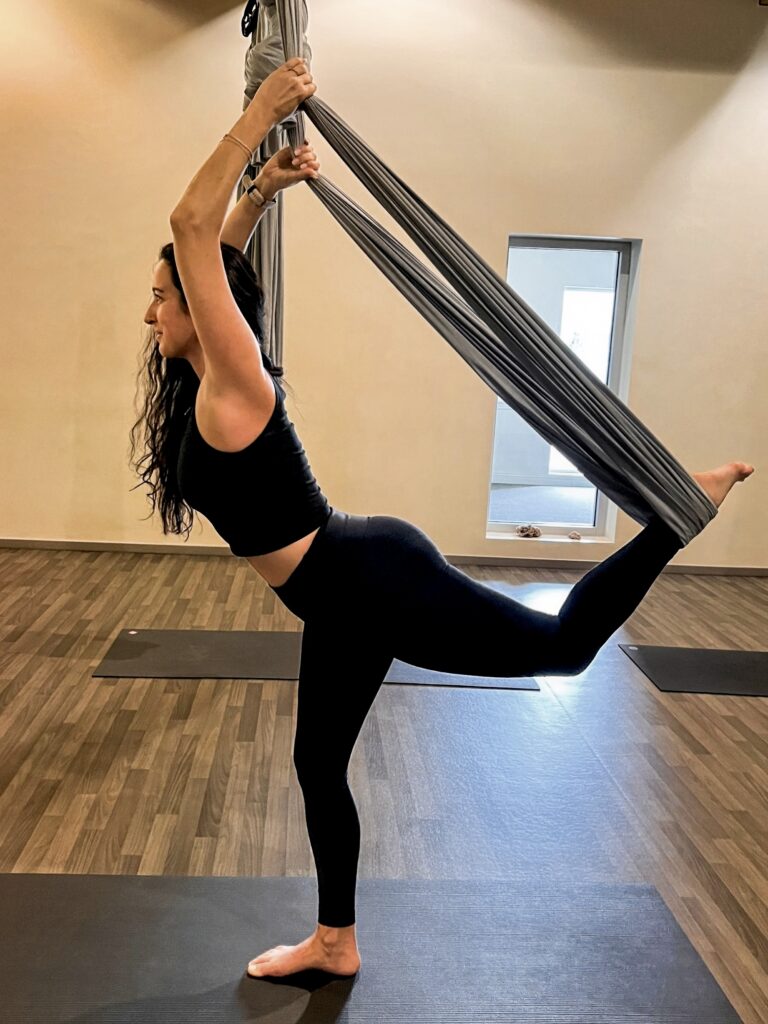
This is where active recovery comes in. For me, it might look like a walk with my dog, a slow yoga flow that gets me out of my head, or time in my sauna blanket—one of my favorite rituals when I can’t make it to the local sauna. There’s something about the sweat, the stillness, the feeling of heat pulling everything out of my system that resets me. It’s about detoxing and processing. It’s about letting my body exhale.
Rest is part of the strategy—not a reward.
We don’t earn rest by doing more. We honor it because it keeps us going. Recovery isn’t passive. It’s intentional. It’s choosing not to overtrain. It’s knowing that long-term strength is built with smart choices, not sacrifice.
Here’s what I’ve learned:
- You can be disciplined without being obsessive. But let’s be real, if you’re in recovery, that line is razor thin. Most of us built our addictions on being experts in obsession. We didn’t half-ass anything, we went all in, even when it was destroying us.
- You can love the gym and love long, slow walks.
- You can do less sometimes and come back stronger.
Your movement doesn’t need to look like anyone else’s.
It doesn’t need to be pretty. It doesn’t need to be perfect. It just needs to be yours. Maybe that means showing up to your mat. Maybe it’s a strength training day. Maybe it’s a sweat session in a sauna blanket with your phone away from you and the music turned up.
You don’t have to explain your pace. You just have to trust it.
If you’re in a season where you’re trying to rebuild trust with your body, or just figure out what works for you—you’re not alone. The goal isn’t to win at wellness. The goal is to stay connected, stay grounded, and move through life with a kind of quiet power that can’t be measured in steps or reps.
You’re allowed to rest. You’re allowed to move with intensity. You’re allowed to do both, depending on the day.
There’s no weakness in recovery.
There’s strength in knowing when to stop, when to go, and when to burn it all off in a sauna that makes you sweat like hell and clears your head in the process.
You’re not lazy. You’re listening.
And that’s what makes you powerful.
